Showing posts with label Food language. Show all posts

Friday, 27 April 2012

Food Language Class: Food on the MAP

There's plenty of food on the map: Bacon, Georgia; Cherry, Nebraska; Rice, Minnesota; Pine Apple, Alabama; Orange, Florida; Orange, Indiana; and Orange, Texas for starters. Here's the right turn down the road to locations that sound appetizing enough to dig on.

We're going to talk about places named for foods, and foods named for places.

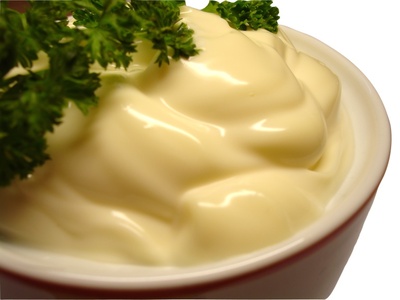
Mayonnaise : Mahon, Spain

Who doesn't know this basic dressing? Basically, mayonnaise is an emulsion (oil-in-water emulsions that are stabilized with egg yolk lecithin). It is made by slowly adding oil to an egg yolk, while whisking vigorously to disperse the oil. This sauce goes well with shrimp and chicken. But what is the relation between this dressing and a name of a place? 
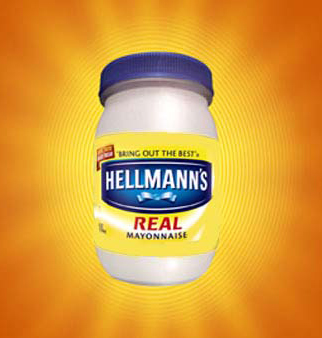

Mayonnaise
Yummy mayo!


It must have been one fun parteyyy! The year was 1756. The french army, under the duke of Richeliu, had just defeated the British on the island of Minorca, off the coast of spain. Even the duke's chef honored the victory with some great food for the celebration, including a special new dressing. He called it mahonnaise, after the island's port city, which named Mahon. Later the name was changed to mayonnaise. 


Turkey : Africa
I wonder where did turkey come from? Was it from Turkey literally? Lets put in a little history here. 

400 hundred years ago, the African guinea fowl found its way onto English dinner plates. This tasty bird originated in Africa, but it had been imported to Turkey before being introduced in western Europe. Since it had come to England from Turkey, the English called it the Turkey-cock
Im a turkey but i'm not Turkish!

When the English came to North America, they was a native bird and assumed it was the same guinea fowl they were already familiar with, the turkey-cock! So the called the American bird a Turkey. Later it was discovered that this American bird was not the same species, but by then everyone recognized it by the name turkey. (Surprisingly, the natives called it a furkee.) 


So the american bird retained the name of a country it had never even visited. And today Thanksgiving would hardly be Thanksgiving without the un-Turkish Turkey. 

Sardines: Sardinia
Why can't you buy fresh sardines at the grocery store? The answer is surprising: Because a sardine is not a sardine until it is packed in a sardine can.

Actually, there is no living fish called a sardine. Any one of twenty different species might end up as a canned sardine. The most common are young herring and pilchard. The name sardine comes from the island of Sardinia, where sardines were first canned in 1834.


Can you point out where Sardinia island is?
Buffalo Wings: New York

They sound like part of some kind of mutant bird. But actually, this is a dish of chicken wings that was originally made in Buffalo, New York - Buffalo chicken wings, more commonly known as Buffalo wings. 


Teressa Bellisimo and her husband ran the Anchor Bar in Buffalo, New York, in 1964. One night her son and his friends came in and wanted a snack. So Teressa mixed a new sauce for the chicken wings she had on hand. She added some celery and dipping sauce and served the snack.

Everyone loved the wings. Their popularity spread first across town and then across the nation. They became known as Buffalo wings, and today people everywhere ask for them. Chillis, TGI fridays also have buffalo wings and it's really goodddd.. Thank you Teressa :)

Wednesday, 18 April 2012

Food language class: Food Folks !!

Have you ever realized that in every activity, event, occasion in our life, we eat?
In sadness and in joy, people eat.
In victory and defeat, people eat.
Before even thinking, while thinking, and after thinking, again people eat.
While meeting, reading, writing (I'm eating chocolate right now), riding, resting, listening, spending, watching, and touring... (sigh) people eat!

Wow. what a fact! Food is necessary for survival folks, our entire culture is based on it. It's in our laws, our money, our superstitions, our celebrations, and especially our language. 

I'm not really a fan of history class but today I'm going to spice up this post with a little bit of history, but don't worry guys, it doesn't give you any brain damage. We are going to have a food language here - and the food that's hidden in our language. why is it called Graham crackers, Beef stroganoff, Eggs benedict, etc? Welcome to the food language class. :)

Some people leave their fingerprints in the cake frosting. Other people's names are on the menu. 

Graham Crackers
The mighty Graham Crackers
Slyvester Graham was Presbyterian minister in Connecticut in the early 1800s. He was convinced that people were suffering from many bad habits, including poor diets. He preached against tight clothing, soft mattresses, and alcohol. He thought pepper, mustard and ketchup caused insanity (Whatt??!). He preached in favor of exercise, open bedroom windows, cold shower, and a vegetarian diet. 
Sir Graham with honey Grahams by Nabisco
Graham is probably most remembered for his belief that white bread = evil and people shouldn't eat white bread. He urged women to stop buying bread from bakeries and instead to make their own. on the other hand, he had many followers back then. Graham societies formed, and Graham boardinghouses and Graham food stores opened. 

Today, health experts know that this guy wasn't all wrong. People are exercising more, eating more vegetables, and using whole-wheat flour! 

How did it made?
So, this graham crackers is using Graham flour which is different than white flour. Many bakers tried to market the crackers, but it wasn't until 1898 that the National Biscuit Company (now Nabisco) made any real inroads into the market with their Nabisco Graham Crackers product. Nabisco achieved evern greater success with their Honey Maid Line, introduced in 1925, which boosted the original graham flavor through the addition of honey. 

I'm sorry Sir Graham, but your graham crackers is not the same as you preached back then. today's Graham crackers are made with bleached white flour, sugar and preservative - OUCH! stab into the heart. :'(
Sir John Henry Kellogg

Kellogg's brand


Do you know Kellog's brand? Yeah. he's the one who invented cornflakes. He had the same belief as Graham. These two people will change the dietary and health in American history, and they did! Bravo!!


Sources:
http://www.snopes.com/food/origins/grahamcrackers.asp
Further reading about Graham and Kellog click here

Beef Stroganoff

The Stroganoff family was well known in Russia for hundreds of years. With their great wealth, they helped develop the Russian mining, fur, and timber industries. There are 2 stories behind this lovely dish. 
Count Pavel Alexandrovich Stroganoff. He's good looking, isn't he?
First story, it goes when it was found that Beef Stroganoff had won the first prize award in a competition, 'L'Art Culinaire' in 1891 where it was presented by Charles Briére, an employee of the Stroganoff family. Legend has it that his patron Count Pavel Alexandrovich Stroganoff had lost all his teeth and his chef had especially prepared this dish to overcome the Count's handicap.


Second story, so Count Pavel Stroganoff, was a celebrity in turn-of-the-century St.Petersburg, a member of the Imperial Academy of Arts, and a Gourmet. It's still arguable if it's him or his chef-Charles Briére who invented this recipe since it was included in the 1871 edition of the Molokhovets cookbook.. which I should presume predates his fame as a gourmet and his loving to entertain guests by hosting dinner parties.
Doesn't it seem odd that a family who contributed so much to a great country's development is remembered today for a beef dish served over rice ??
Beef Stroganoff
Caesar Salad

If you think this salad is related with caesar things, you're totally wrong. It has nothing to do with the emperor who ruled Rome two thousand years ago. The caesar salad at your local cafe was originally called aviator salad


In 1924 an American named Alex Cardini worked at his brother's restaurant in Tijuana, Mexico. One night more customers than usual came in to eat, and the restaurant kitchen ran out of the usual menu items. So Alex put together odds and ends- eggs, romaine lettuce, Parmesan cheese, garlic, olive oil, lemon juice, and pepper. He made croutons out of some dried bread and then mixed everything together. 
The customer loved it!! 
He named it aviator salad since the restaurant was near an airfield. Later the name was changed to Caesar salad after Alex's brother, who owned the restaurant.

Source:
http://www.beefstroganoff.net/history.php
http://www.foodtimeline.org/foodmeats.html
http://www.frccusa.org/Cuisine.html